When AI Gets It Wrong: Hallucinations and the 30-Second Check
Sometimes an AI states something false with complete confidence. It isn't lying and it isn't broken; it's doing exactly what it was built to do. Here's why hallucinations happen, when to expect them, and the 30-second habit that catches nearly all of them. Part 4 of our Starting With AI series.
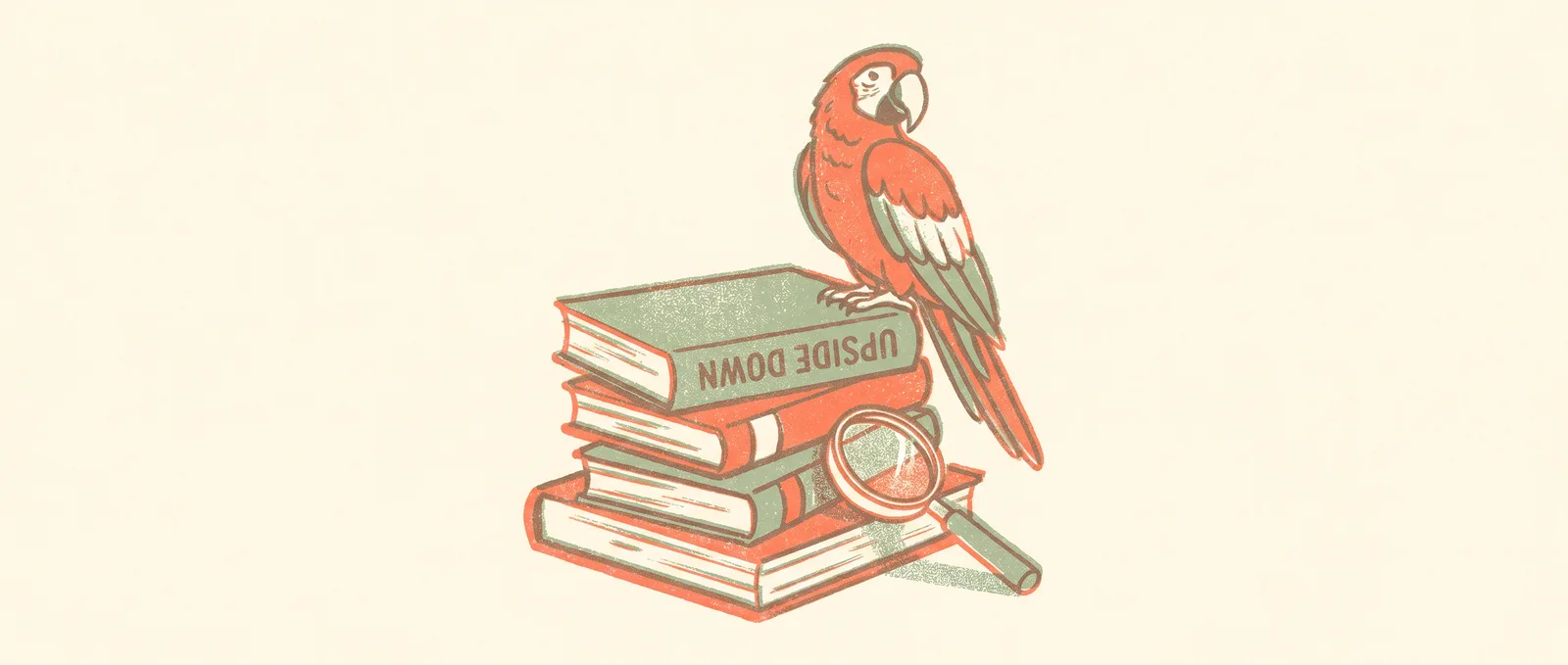
Ask an assistant for a book recommendation and it might invent a title that has never existed, complete with a plausible author and a warm little summary. This is the famous hallucination problem, and understanding it properly is the difference between using AI nervously and using it well.
Here’s the reassuring part: hallucinations are predictable. They cluster in specific places, and one small habit catches nearly all of them.
Why a machine makes things up
A language model answers by predicting, word by word, what a good answer would look like. That’s the whole mechanism. When the model knows a topic well, prediction and truth align beautifully. When it doesn’t, the machinery keeps producing fluent, confident text anyway, filling gaps with whatever is statistically plausible.
Researchers add a second reason: the way models are trained and measured has historically rewarded a confident guess over an honest “I’m not sure.” A model that shrugs scores worse on tests than one that bluffs, so bluffing is what the training quietly encourages. The newest generation of models is better at expressing uncertainty, but the tendency hasn’t disappeared.
A hallucination isn’t a glitch. It’s fluency running ahead of knowledge, delivered in the same confident voice either way.
The unsettling part for beginners is exactly that voice: wrong answers don’t look different from right ones. No hesitation, no red flag, same warm tone.
Where hallucinations live
They aren’t spread evenly. Expect them around the edges of knowledge: specific numbers, dates, prices, and statistics. Names of people, papers, court cases, and books. Anything recent, if the assistant didn’t actually search the web. Niche topics where little was written. Links and citations, which can look perfect and lead nowhere.
And expect very few of them in the tasks from earlier in this series: rewriting your email, explaining a concept, planning your week. That’s why those are the right starter tasks. The risk lives almost entirely in “look up a fact for me,” not in “help me think.”
The 30-second check
For anything factual that matters, run this tiny routine. First ask: would a mistake here cost me something? If it’s a dinner plan, relax. If it’s medical, legal, financial, or going in something you’ll publish, continue. Second: check the load-bearing fact, the one number or name the answer stands on, with one quick search. Third, and this one is surprisingly effective: ask the assistant itself, “How confident are you in that? What should I double-check?” Models in 2026 are noticeably honest when asked directly.
Thirty seconds. Not for everything, just for facts that carry weight. It becomes automatic within a week.
What the tools do to help
The assistants aren’t standing still. Most can now search the web before answering time-sensitive questions, and the good ones show their sources. Europe’s new AI rules push providers toward clearer honesty about limitations. And interpretability research, like Anthropic’s work on reading a model’s internal “working memory,” is slowly making it possible to see what a model actually knows rather than what it merely says.
Until then, the deal is simple: the AI brings speed and breadth, you bring the judgment. Which leads to the last part of this series, and the biggest lever you have: what you put in before the AI answers.
Your First Week With AI: Seven Small Tasks That Teach You Most of It
Reading about AI teaches you almost nothing. Doing seven small, real tasks teaches you most of it. A one-week starter plan with one honest exercise per day, each chosen to build a skill you'll use forever. Part 3 of our Starting With AI series.