A Turing Award Winner Bets Against Deep Learning With His New Startup Oak Lab
Richard Sutton, co-founder of modern reinforcement learning, has launched Oak Lab in Toronto. His goal: AI agents that learn continuously from experience, because he thinks today's methods are 'weak and inefficient.'
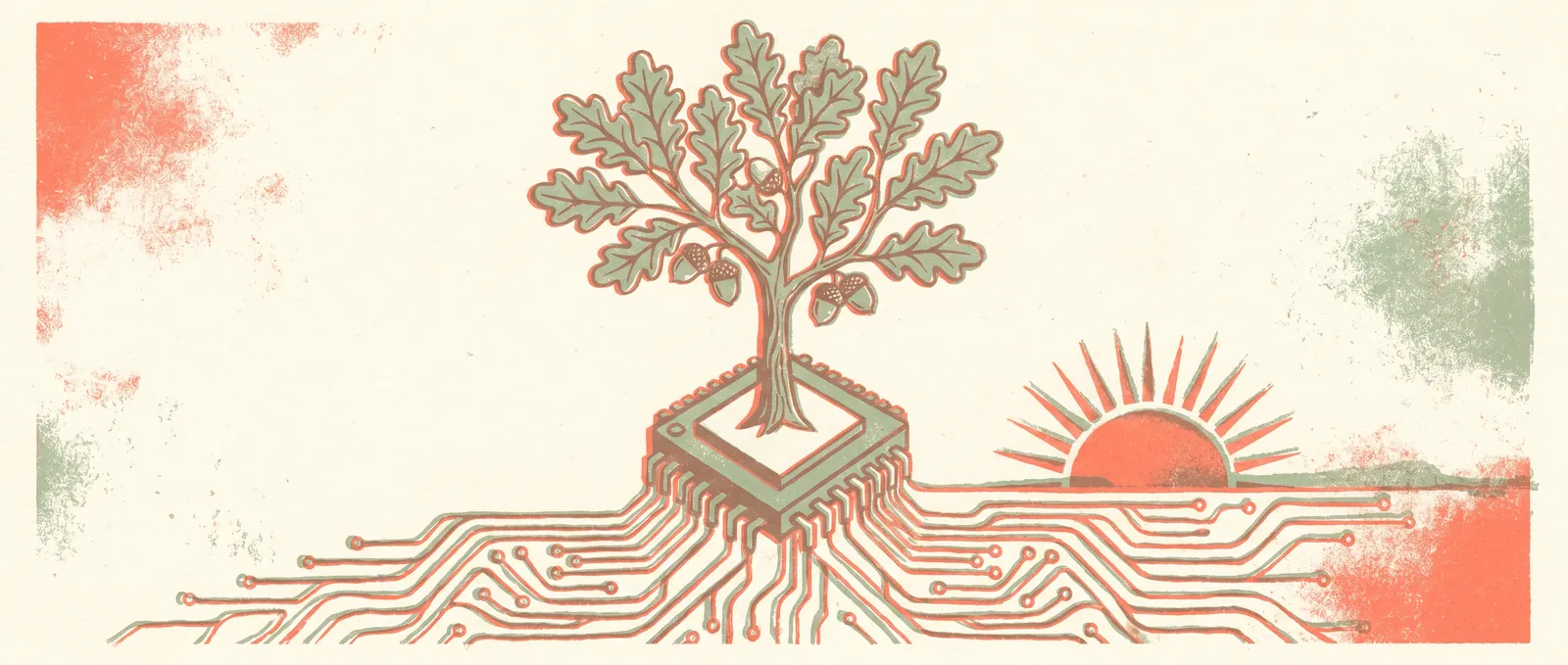
Richard Sutton, winner of the 2024 Turing Award, computer science’s equivalent of the Nobel Prize, has founded a new AI startup called Oak Lab in Toronto, together with researcher Khurram Javed. Both previously worked at Keen Technologies, the AI company run by legendary programmer John Carmack.
Sutton is one of the founding figures of reinforcement learning, the branch of AI where systems learn by trial and error, collecting rewards for good moves, the technique behind AlphaGo and part of how chatbots get their final polish today. So it carries some weight when he says current deep learning methods are “weak and inefficient” and need “not more tweaks, but fundamentally new ideas.” His argument, made repeatedly over the past year: today’s language models are brilliant imitators of human text, but they can’t truly evaluate their own outputs or discover genuinely new things. Oak Lab’s stated goal is an agent that learns continuously from its environment while it operates, rather than being trained once on a giant static dataset and then frozen. The long-term ambition sounds almost like science fiction: an agent with “a trillion parameters that learns and plans in real time with 20 watts of energy.” Twenty watts, for reference, is roughly what a human brain runs on.
What’s behind this? There’s a real scientific split hiding under the startup news. The big labs, OpenAI, Anthropic, Google, are betting that scaling today’s models further will keep working, and their results so far back them up. A small but distinguished group of researchers, including Sutton and former Meta chief scientist Yann LeCun (who left to found his own startup with a different alternative approach), believes this path eventually flattens out and that learning from experience is what’s missing. Worth knowing: Sutton is also famous for “The Bitter Lesson,” a widely cited essay arguing that general methods plus more computing power always win in the long run. He’s not against scale, he thinks we’re scaling the wrong kind of learner.
What this means for you: Nothing in your daily AI use changes, Oak Lab has no product, and its first results are likely years away. But it’s a useful reality check against the narrative that AI progress is a settled, one-way street. Some of the field’s most decorated researchers believe the current recipe has a ceiling. Whether they’re right is one of the most interesting open questions in AI, and where the next leap comes from may depend on the answer.
Sources
Source: https://oaklab.ai/
Claude Code Gets a Built-In Browser That Can Read, Click, and Type for You
Anthropic added an integrated browser to Claude Code's desktop app. The AI can now look up documentation, check issue trackers, and interact with websites, with safety checks screening anything it tries to change.