AI Cheating Is Getting Easier to Do and Harder to Prove
Cheating on online tests and hiring assessments has roughly doubled as AI tools spread, and the detectors meant to catch it are shakier than they look. What that means whether you are studying, hiring, or being tested.
As AI assistants get better at answering questions on the fly, a predictable problem is getting worse: cheating on tests. Reports over the past year point in the same direction. Testing firm CodeSignal found that cheating on technical hiring assessments doubled in a year, from about 16% to 35%, and various studies now estimate that a large share of online exams face active AI-assisted cheating. The uncomfortable twist is not just that cheating is up, but that catching it reliably is genuinely hard.
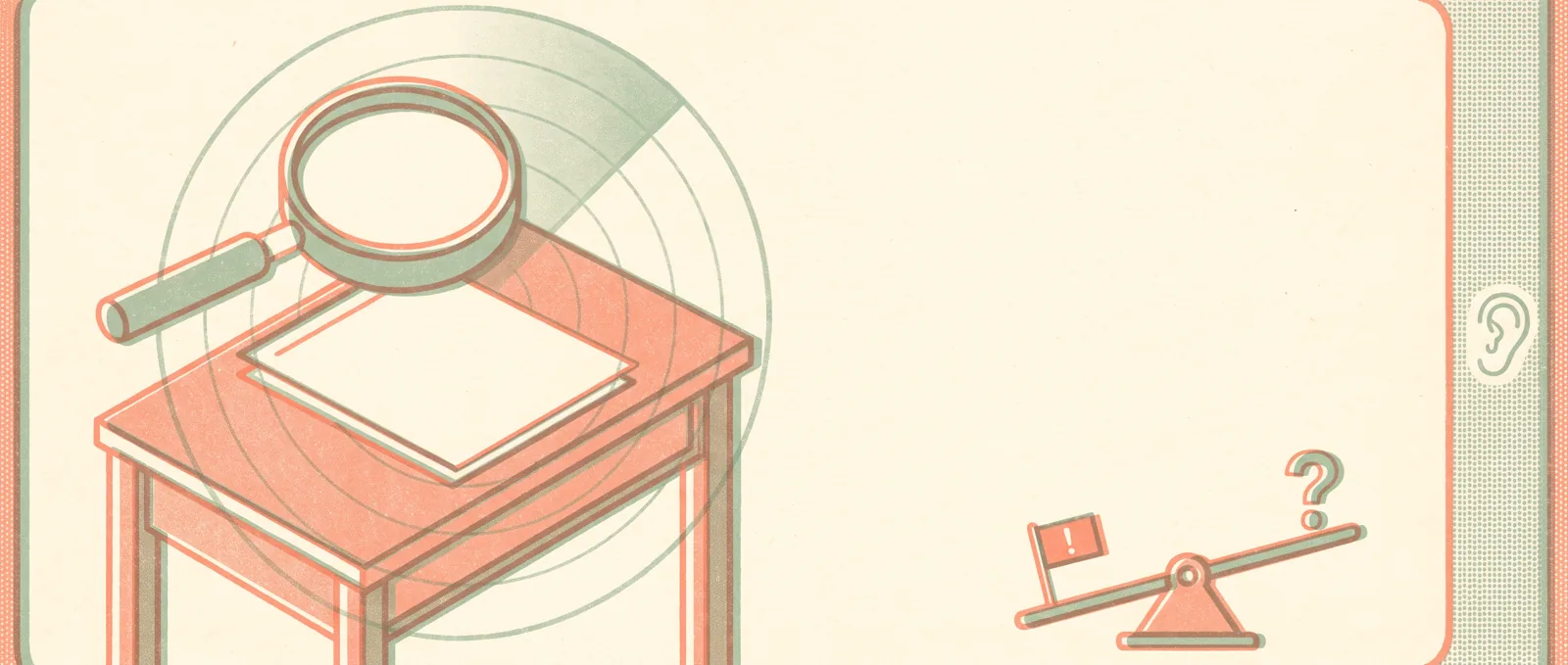
The reason comes down to what detection tools can actually tell you. Older cheating left traces: a pasted block of text, a suspiciously fast answer, a switched browser tab. Modern AI help can leave almost none. And when an automated system does raise a flag, it is not saying “this person cheated.” It is saying something narrower: “this pattern did not match what we expected.” That gap, between an anomaly and proof, is where the whole problem lives. A student who writes unusually well, or a nervous candidate who behaves oddly on camera, can trip the same wire as an actual cheater.
This is why the industry is quietly shifting its approach. Rather than trusting an AI proctor (software that watches you take an exam) to deliver verdicts, the emerging standard is “AI flags, humans review.” The automated layer narrows down what to look at; a person makes the call. It is slower and more expensive, but it acknowledges an honest limit: today’s detectors are good at noticing that something is off and bad at proving why. Leaning on them alone risks two failures at once, missing real cheating and falsely accusing honest people.
What this means for you: If you are a student or job-seeker, know that automated flags are not proof, and that a false positive is a real risk worth being ready to contest calmly. If you run assessments or hire, the practical move is to stop treating detection scores as evidence and redesign the test instead: ask for reasoning shown live, use oral follow-ups, or set tasks where using AI well is the point rather than something to police. And for everyone, there is a broader lesson here about AI detectors in general, including the ones that claim to spot AI-written essays or images: they deal in probabilities, not certainties. Treat their output as a reason to look closer, never as a final answer. Worth keeping expectations grounded: this is a moving target, and the tools on both sides are improving at once.
Sources
Source: https://www.theregister.com/ai-and-ml/2026/07/21/ais-cheatin-heart-will-make-you-weep/5275784
Anthropic Says It Rewrote a Million Lines of Code in Two Weeks Using Its Own AI
Anthropic published how its engineers used Claude Code to port huge codebases between programming languages in weeks instead of years. Impressive, genuinely useful, and a good window into what AI coding is actually good at.