Meta Stops Grading Engineers on How Much AI They Use
After staff raced each other up an internal token leaderboard, Meta told engineers that AI usage dashboards and token counts will no longer count in performance reviews. The episode has a name now: tokenmaxxing.
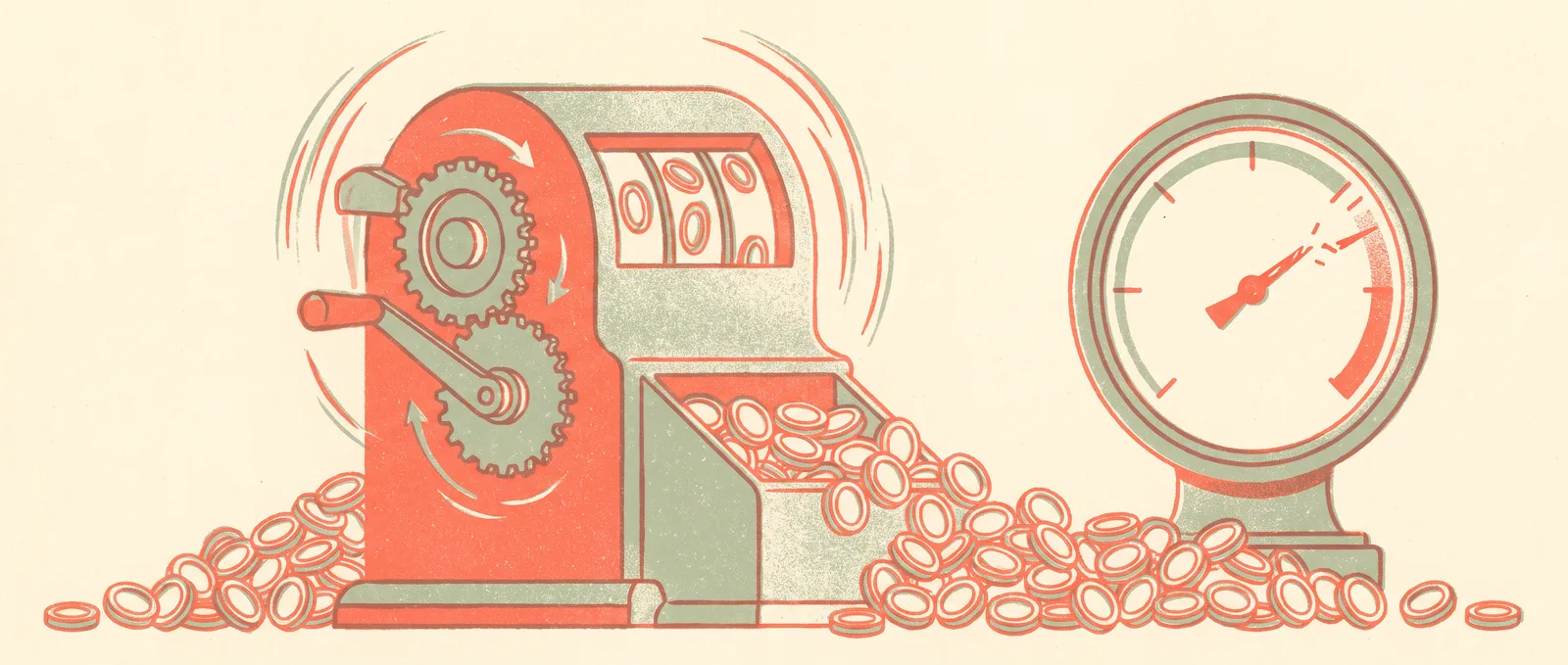
Meta has told its engineers that AI usage dashboards and token counts will no longer factor into performance reviews. The instruction came in an internal memo from executives Maher Saba and Santosh Janardhan, first reported by The Information. What counts instead, the memo says, is the quality, speed and complexity of the work itself.
This is a reversal. Meta had previously made AI use a core expectation in reviews, and the predictable thing happened. An employee built an internal leaderboard on the company intranet, nicknamed Claudeonomics, that ranked more than 85,000 staff by how many tokens they burned through, tokens being the units of text an AI model processes and the thing you get billed for. The top 250 were listed. Reported consumption hit 73.7 trillion tokens in a little over 30 days. Staff started calling the behaviour tokenmaxxing: running AI on things that did not need it, at length, to climb a chart. CTO Andrew Bosworth pushed back in his own memo, writing that nobody should be using AI tools just for the sake of using them and that all motion is not progress. The bill was not theoretical either. Meta’s internal AI spending is reportedly heading into the billions for 2026, which is why budgets and a central cost dashboard are planned for 2027. Meanwhile the company says AI agents assist with 93 percent of its code changes, while insisting adoption is not the goal in itself.
What is behind this
This is Goodhart’s law with a fresh coat of paint: when a measure becomes a target, it stops being a good measure. Token count is easy to log, which is exactly why it got picked, and it has almost no relationship to whether the work was any good. You can burn a million tokens on a task a colleague solved in ten minutes with a search.
The deeper problem is that AI usage is an input, not an output. Companies reach for input metrics when the output is hard to measure, and software quality is famously hard to measure. Meta had a real question, which is whether staff were adopting tools that genuinely help, and picked the one number that could not answer it. Worth noting that Meta is not backing away from AI at all: 93 percent agent-assisted code changes is a very high number. It is backing away from counting.
What this means for you: If your employer has started tracking AI usage, this is a useful precedent to point at, and it came from a company that is all in on the technology. The honest version of the question is not “did you use the tool” but “did the work get better or faster.” If you use AI yourself, the takeaway is smaller and more personal: reach for it when it saves you something real, and skip it when it does not. Nobody is keeping score, and where they were, it went badly.
Sources
Microsoft Patched a Record 973 Security Holes, and an AI Found Some of Them
September's Patch Tuesday is the largest ever: 973 fixes, 113 critical, two already under attack, and three flaws in Copilot products. Microsoft says an agentic scanning system helped surface part of the batch.