Claude Chose a Gene Therapy and Guided a Mouse Brain Injection, Researchers Say
An Oxford-linked team says Claude Sonnet 5 picked the therapy and target and ran a mouse brain injection under a vet's approval; results are unreviewed.
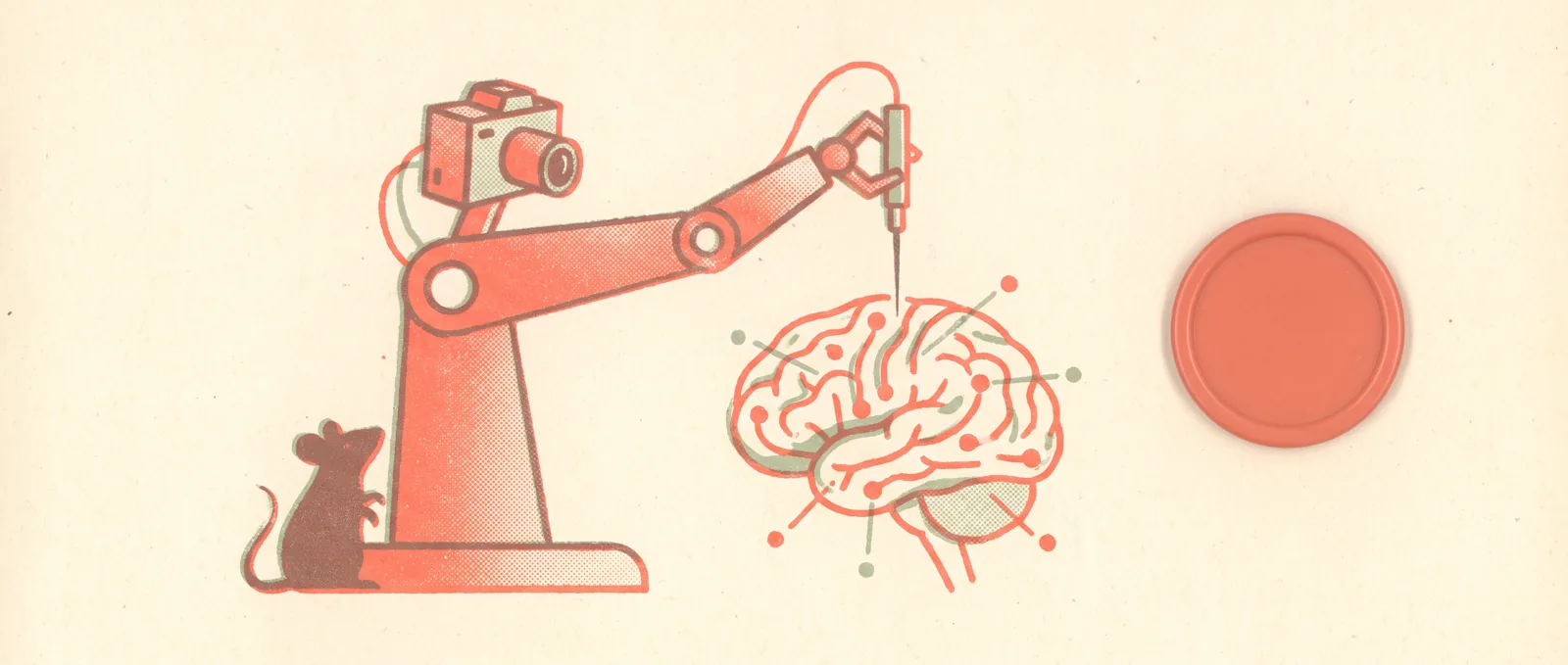
A researcher says he has let an AI agent decide on and carry out a gene therapy experiment in a living mouse, with humans acting as safety checks. The claim comes from Gabriel Ocana-Santero, CEO of the startup Exin Therapeutics and a PhD student at Oxford, in a thread on X that The Decoder reported on October 30. It is not yet a peer-reviewed paper.
The setup: Claude Sonnet 5 was given a list of 19 possible gene therapies, a mouse model of epilepsy and a custom motorised surgical device with cameras. Its only instruction was to reduce the mouse’s seizures. The agent reportedly picked a therapy that boosts a specific inhibitory signalling pathway, chose a brain region that the literature links to this seizure type, rejected a second region because earlier studies found its effects unreliable, worked out injection coordinates from three papers, and set the volume, speed and waiting times. During surgery it made 32 camera observations and reported on bleeding.
The safeguards matter as much as the autonomy. A licensed veterinarian approved every irreversible step, a physical emergency stop could cut power to all motors, and fixed limits, such as a cap on injection volume, could not be bypassed by the agent. Midway, a dropped connection left the target outside the device’s physical range. The agent refused to continue, even after recalibration, and the article says it was right: earlier manual adjustments had thrown off the control system. The researcher fixed the code by hand. Reportedly the mouse recovered well, but no seizure data has been shared yet.
What’s behind it: Labs call this “lab in the loop”: an AI proposes an experiment, a machine runs it, the result feeds the next round. Existing surgical robots usually carry out procedures a human chose. What is new here, if the account holds, is that the choosing was done by the model as well. Models also differ: Sonnet 5 was reportedly the only one willing to run the live procedure, while Opus 5.5 and Opus 5 refused, with Opus 5 saying that stopping mid-injection would be worse than not starting.
Worth keeping expectations grounded. The “first of its kind” claim is the lead researcher’s own, the evidence is a social media thread, and outcome data is missing.
What this means for you: Nothing changes in your chatbot. The takeaway is about direction: AI agents are moving from advising scientists to running experiments, with humans as supervisors. Watch for the promised technical report and for independent replication before drawing big conclusions.
Sources
Source: https://x.com/OcanaSantero/status/2115442964574908902
A Fake Claude Code Extension Slipped Into Cursor's Marketplace for 11 Hours
A tampered Claude Code extension tried to collect machine details and set up remote access for up to 5,000 Cursor users before the marketplace was pulled offline.