Adobe Tests an AI Agent That Edits Images Step by Step, and Checks Its Own Work
Adobe Research and UC San Diego present EditAgent, which splits edits into steps, tries several versions and picks the best one using measurements.
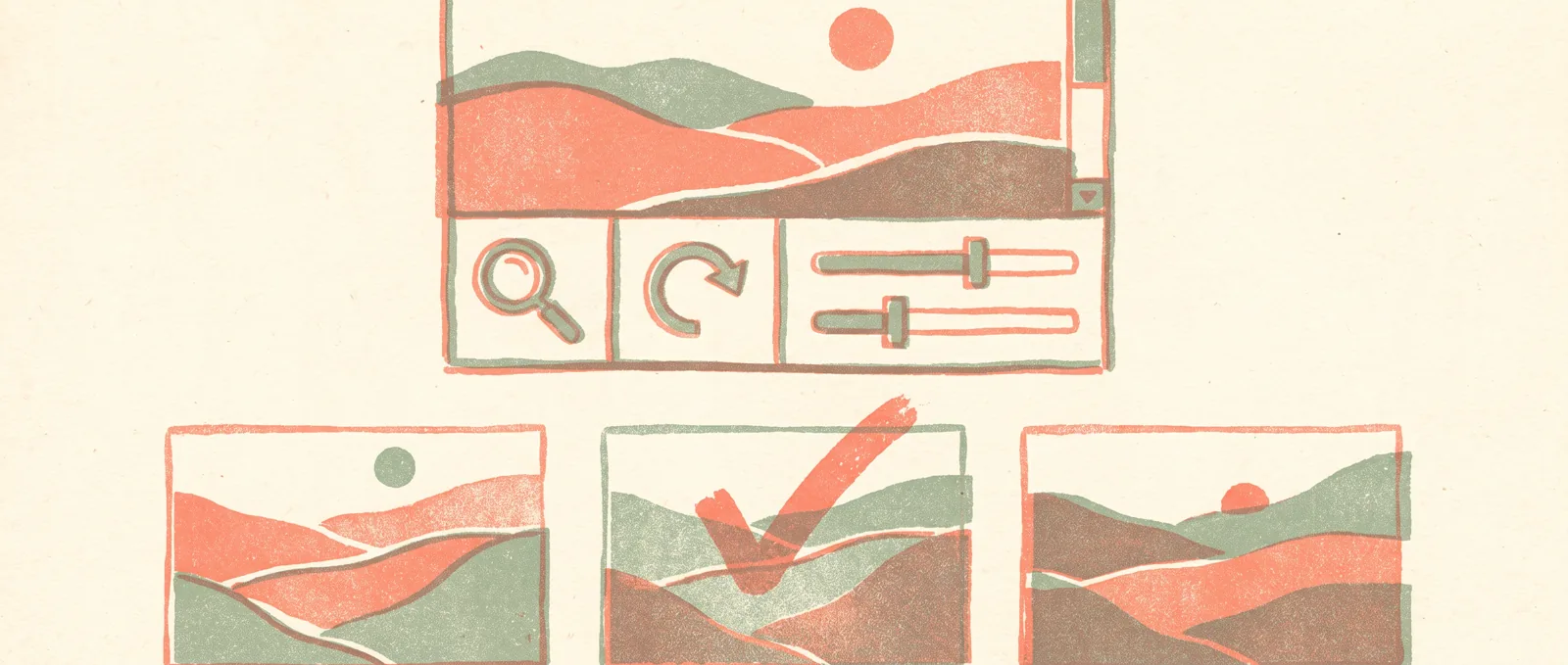
Adobe Research and UC San Diego have published a paper on EditAgent, an AI system that edits images the way a careful person might. Instead of sending one big instruction to one image editor, it breaks the request into steps, uses specialised tools for things like sharpening, zooming, rotating and adjusting tone, and creates several candidate results at once. Then a language model, an AI that works with text, chooses the best candidate based on measurements such as close-up crops, change maps and brightness and colour statistics.
The reason is that general-purpose editors fail often. In a test of 600 edits rated by five professionals, the editor Flux-2-Klein-9B failed 42.7% of the time. Specialised tools fixed roughly two-thirds of those failures. Professionals preferred the parallel versions over step-by-step refinement in 78.5% of the comparisons where they picked a side. With the measurement data, the open model Qwen3.8-27B picked a usable result 81.3% of the time, compared with 74.8% for a fine-tuned judge model. The agent also produced about 26,000 verified examples, and editors trained on them improved on three benchmarks.
What’s behind it: Adobe added AI agents to Photoshop, Premiere and other Creative Cloud apps in a public beta in June, so how well an agent picks tools and checks itself matters directly for those products. The idea is simple: “generate a few options and verify with evidence” works better than “trust the first attempt.” The costs are real, though. The agent needs about ten times the computing power of a single editor, results depend on which tools are plugged in, and training on the editor’s own generated data made it worse. All numbers come from the authors’ own benchmark, not an independent test, and the base editor used has since been replaced by a newer one.
What this means for you: If you edit photos with AI, expect future tools to do more in the background, such as trying several versions and showing you the best. That can save retries, but it may also use more credits or processing time. For now, EditAgent is a research paper, not a button you can press. A good habit regardless: when an AI edit goes wrong, ask for a smaller, more specific change instead of repeating the whole request.
Sources
Google, OpenAI, Anthropic and Microsoft Back One Switch to Keep Your Site Out of AI Training
A proposed robots.txt directive would let publishers block AI-training crawlers with one rule instead of one rule per company.