SAP Just Spent Over a Billion Euros on AI That Reads Spreadsheets, Not Chats
SAP has closed its acquisition of Freiburg startup Prior Labs and committed more than one billion euros to it. The bet is on tabular foundation models, AI built for tables and databases rather than text.
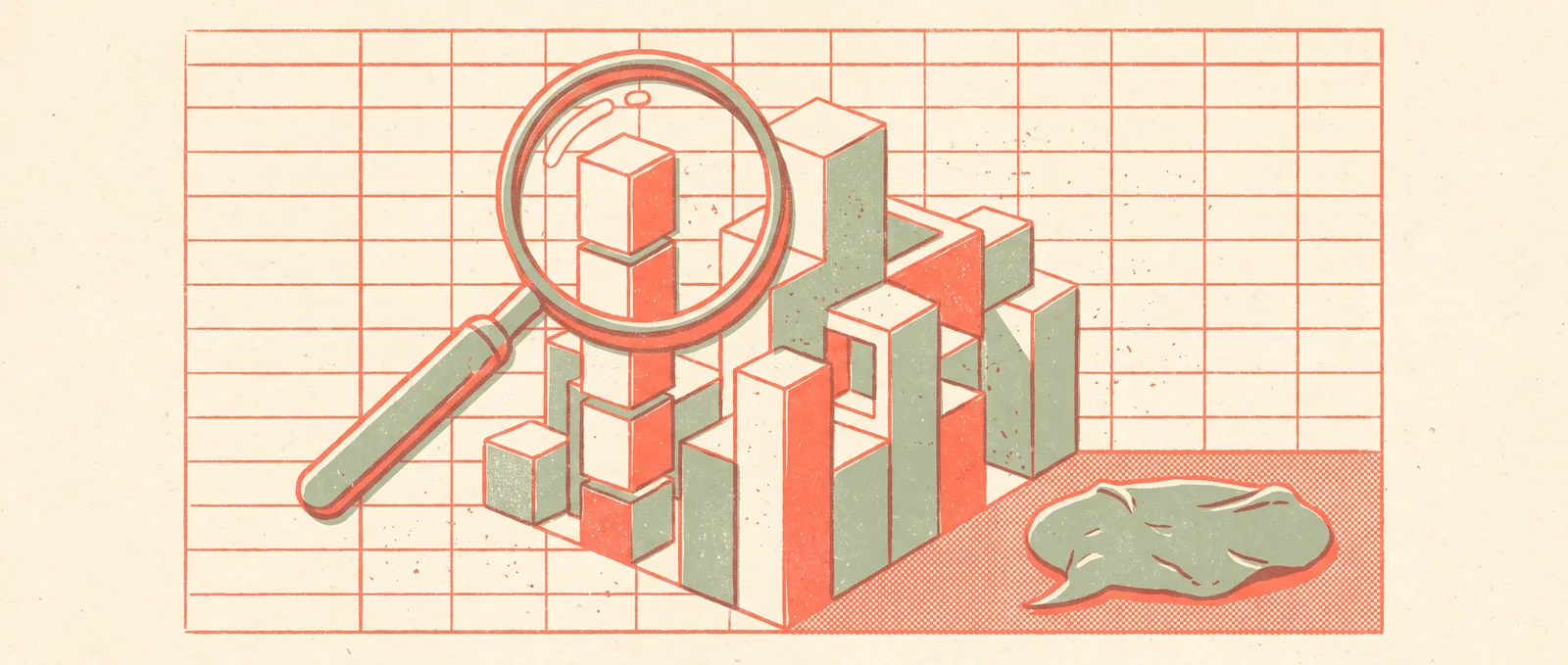
While everyone else argues about which chatbot is smartest, SAP has quietly closed a deal on a completely different kind of AI. The German software group has completed its acquisition of Prior Labs, a Freiburg startup founded roughly 18 months ago, and committed more than one billion euros over four years to grow it into a frontier AI lab in Europe. Prior Labs keeps its own name, its Freiburg headquarters, its offices in Berlin and New York, and its open-source work, operating as an independent entity inside SAP.
What Prior Labs builds is worth explaining, because it is not a chatbot. Its speciality is tabular foundation models: AI systems pretrained on structured, table-shaped data rather than on prose. Their best-known model, TabPFN, is open source and has passed three million downloads; the current TabPFN-2.6 sits at the top of TabArena, a public leaderboard for this kind of model. An earlier version of the approach was published in Nature. The scientific advisory board includes Yann LeCun and Bernhard Schölkopf. For context on the size of the jump: the company had raised a single pre-seed round of around nine million euros, led by Balderton Capital, before this exit.
Here is why a database-focused model is not a consolation prize. Most of what a business actually runs on is not text but tables: sales records, inventories, ledgers, sensor logs, customer databases. Language models are good at documents and conversation and mediocre at a million-row spreadsheet, because a model trained on sentences is not naturally suited to columns of numbers. A model built for that shape of data can forecast, spot anomalies and make predictions directly, without the elaborate hand-tuning that traditional machine learning usually needs. SAP sits on an enormous amount of exactly this kind of data, which makes the logic of the purchase fairly plain.
What this means for you: If you are new to AI, this is a useful correction to a common assumption. AI is not one thing that chats; it is a family of tools, and the one that fits your problem may have nothing to say. If you work with data, the practical takeaway is concrete: when your question is “predict a number from a table”, a tabular foundation model is now a real option worth testing against your existing spreadsheet formulas or gradient boosting setup, and TabPFN is open source, so trying it costs nothing but time. Worth keeping expectations grounded, though: a billion-euro commitment is a plan, not a product, and benchmark leadership on TabArena does not automatically mean better results on your messy real-world data.
Sources
Source: https://news.sap.com/2026/07/sap-completes-prior-labs-acquisition/
The US Wants a 30-Day Look at New Frontier Models Before They Ship. Here's What That Actually Means
A voluntary framework with OpenAI, Google and Anthropic would give federal agencies up to 30 days to review a new frontier model for national security risks. An announcement is expected before 1 August.