Jack Dorsey's New App Buzz Puts People and AI Agents in the Same Team Chat
Block launched Buzz, a free open-source workspace that blends Slack-style chat with code hosting and gives AI agents their own identities. Here is what that actually means.
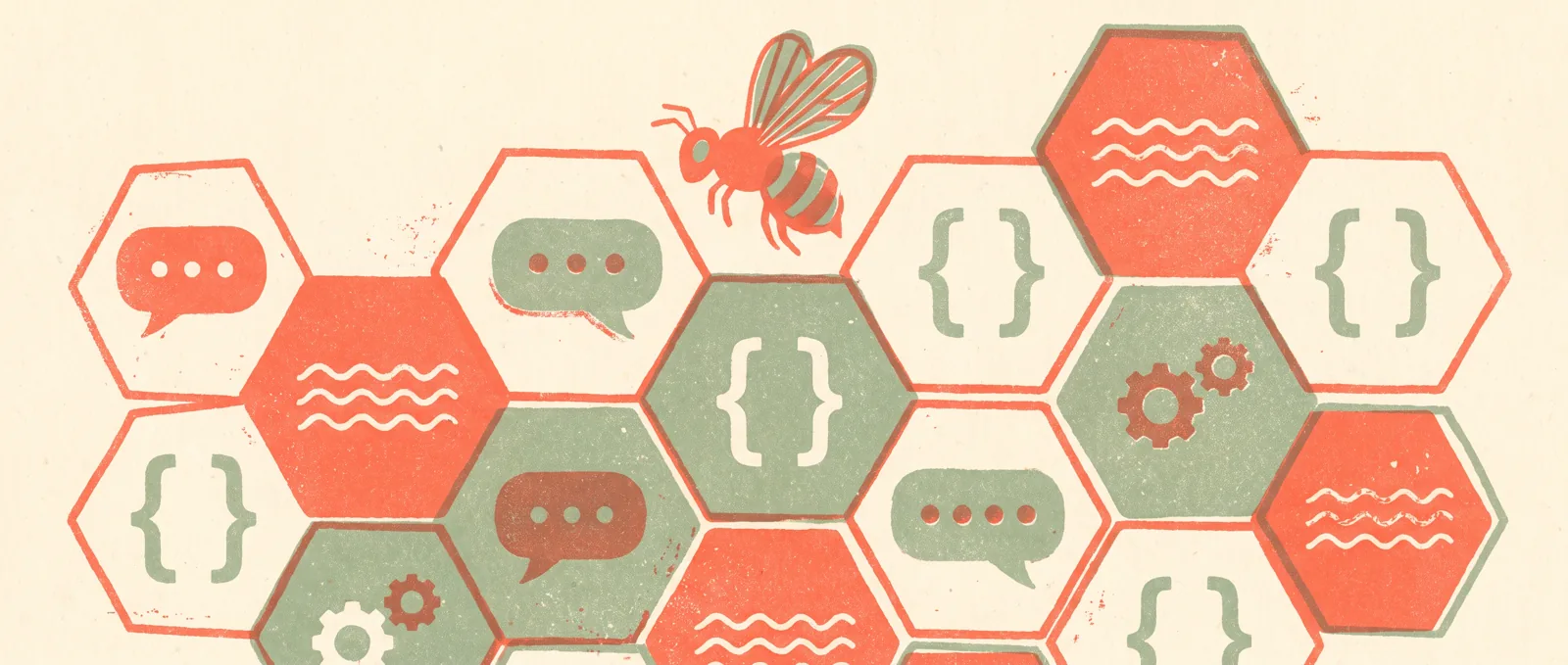
Block, the company led by Jack Dorsey, has launched Buzz, a free and open-source workspace where employees and AI agents share the same team chat. Think of it as Slack and GitHub rolled into one, but designed from the start so that software agents are members of the team, not just add-ons.
What is actually in it. Buzz bundles the familiar pieces of a modern chat tool (channels, threads, direct messages, voice, and file sharing) together with code repositories and automated workflows, all in one interface. The twist is that AI agents get their own accounts with cryptographic identities and set permissions. That means an agent can post messages, review code, run approved automations, and even create its own channels, working alongside people rather than being summoned like a bot. It is model-agnostic, so teams can plug in agents built on Anthropic’s Claude Code, OpenAI’s Codex, or Block’s own open agent framework, goose. The code is out under an open license, and you can either self-host it or use Block’s managed version. Dorsey described it as “model-agnostic, decentralized, self-sovereign, and open source.” In a nice detail, Block says it built Buzz itself largely using agents.
Here is the thinking behind it. Under the surface, Buzz runs on Nostr, an open protocol where your identity is a key that belongs to you, not to any one company. Block argues that identity is the “most fundamental problem” once AI agents start doing real work: you need to know who (or what) did each action, and be able to trust it across different tools. So every message, code review, and workflow step is recorded as a signed entry in a single shared log, creating a tamper-evident trail whether a human or an agent did it. That said, keep expectations grounded. Buzz is early, shipping as version 0.4.21 with unfinished mobile apps, and despite the “decentralized” label, each workspace currently runs on a single server, which is its one source of truth.
What this means for you: If your team is starting to lean on AI agents for coding or routine tasks, Buzz is an early look at how “humans and agents in one room” might work, with a clear record of who did what. Because it is open and self-hostable, it also appeals to teams that would rather not hand their workflow to a proprietary platform. For most individuals, this is not something to switch to today, but it points at a real shift: the tools we work in are starting to treat AI as a coworker with a name and a track record.
Sources
Source: https://block.xyz/inside/introducing-buzz-where-humans-and-agents-work-together
Google Ships Three New Gemini Models, All Fast and Cheap, and Skips the One Everyone Wanted
Google released Gemini 3.6 Flash, 3.5 Flash-Lite, and a cybersecurity model, aiming for speed and low cost. But the flagship Pro update is still missing.