Free AI Legal Help Sounds Great Until Everyone Uses It. Britain's Tribunals Are Finding Out
Urgent applications at UK employment tribunals have risen a hundredfold as workers use chatbots to draft claims. Many filings run hundreds of pages and cite laws that do not exist.
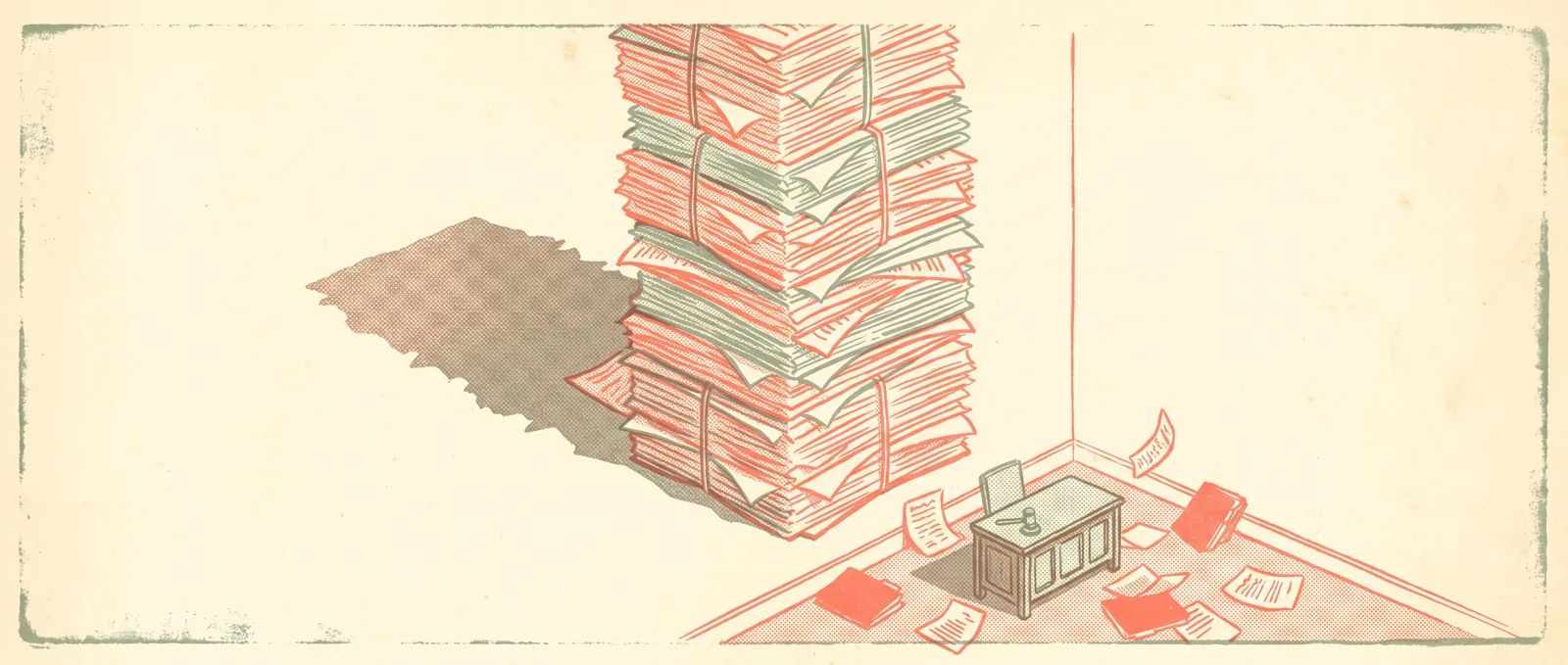
Applications for interim relief at Britain’s employment tribunals, the urgent requests that jump the queue, have risen roughly a hundredfold. The reason is not a sudden collapse in workplace behaviour. It is that workers who would once have paid a solicitor, or given up, now ask ChatGPT or Grok to write the claim for free. A memo from tribunal presidents Barry Clarke and Susan Walker, reported by The Economist, sets out the damage: claims up 39 percent in the year to March 2026, and the backlog up 55 percent to 64,000 unresolved cases.
The problem is not that people are filing. It is what they are filing. Many AI-drafted submissions run to hundreds of pages, cite laws that were never passed, and demand remedies no tribunal can grant. Every one of those still has to be read by a judge and answered by an employer. The Economist calls it a “tragedy of the commons, AI edition,” and the phrase fits: each individual filing is rational, cheap, and takes minutes, while the shared resource being consumed is the finite attention of a court system. The people who lose most are workers with genuine grievances, who now wait considerably longer behind a wall of machine-generated paper.
It is likely to get worse before it gets better. Labour’s new Employment Rights Act adds roughly 25 new grounds for claims and removes caps on compensation, which raises both the number of possible cases and the incentive to file one. The United States is going through the same thing, where one federal judge described AI-generated lawsuits as an “existential threat to the federal courts.”
Here is the part that complicates the easy conclusion. The same technology, pointed the other way, does the opposite. A study from Pakistan found that judges given AI tools and proper training worked through more cases, faster, and cleared serious backlogs. So the technology is not the variable. The variable is who holds it and whether anyone checked the output. A chatbot handed to a judge with training compresses work. The same chatbot handed to a stressed person with no legal background generates confident, well-formatted, unverified text, and the machine has no idea which of its citations are real.
What this means for you: If you are ever tempted to have an AI write something legal or official on your behalf, the useful mental model is that you are getting a very fluent first draft from someone who has never read the actual statute. Use it to understand your situation, to draft in plain language, to ask what questions you should be asking. Then have a human who knows the law check every citation and every claim before it goes anywhere near a court, a landlord, or an employer. Free legal drafting is a real gain for people who could not afford a lawyer. It only stays a gain if somebody verifies it, and right now that somebody has to be you.
Sources
Source: https://www.economist.com/britain/2026/08/06/the-tragedy-of-the-commons-ai-edition
Google Turned a Finished Model Into a Much Faster One, and Published the Recipe
DiffusionGemma writes 256 words at once instead of one after another, hits about 1,500 tokens per second, and cost less than ten percent of a fresh training run. The technical report explains the tradeoffs.