StemDeck Splits Songs Into Their Parts on Your Own Machine, for Free
A new open-source app pulls vocals, drums, bass, guitar and piano out of any track using the Demucs model, entirely offline. No account, no upload, no subscription.
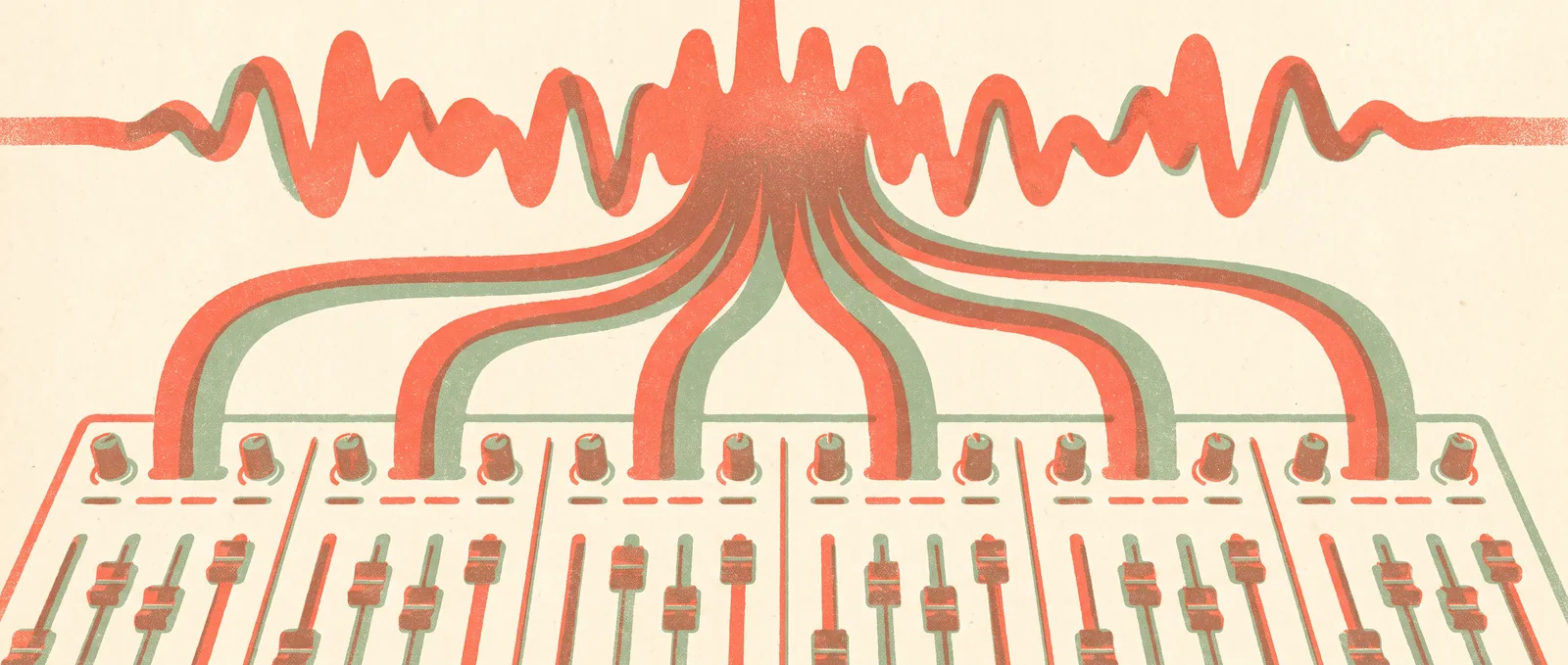
If you have ever wanted the vocals off a track so you can sing over it, or just the drum part so you can learn it, you have probably run into a paid website that wants an upload and a subscription. StemDeck is a new free and open-source app that does the same job on your own computer. Drop in an MP3, WAV, FLAC, OGG, MP4 or M4A file, or paste a YouTube link, and it separates the audio into up to six stems: vocals, drums, bass, guitar, piano and everything else.
Playback happens in a mixer that will look familiar to anyone who has opened recording software. You can mute and solo individual parts, adjust levels, zoom into the waveform, loop a section, and export either single stems or a custom mix. It runs on Windows, macOS and Linux. Under the hood it uses htdemucs_6s, a model from the open-source Demucs project, and it picks the fastest processor it can find on your machine: CUDA on Nvidia graphics cards, MPS on Apple Silicon, and plain CPU if neither is available. CPU works, it is just slower. The project describes itself as alpha, so expect rough edges.
What’s actually going on here: source separation used to be genuinely hard. Once instruments are mixed into two channels, the information about which sound came from where is gone, and the model has to reconstruct it from learned patterns of what a snare or a human voice looks like in a spectrogram. Demucs and its successors solved this well enough that the results are usable, and the interesting shift is that the model is small enough to run on ordinary hardware. That is the quiet trend behind a lot of local AI: not that laptops got powerful enough for frontier models, but that useful specialised models got small. The commercial services here are mostly a friendly interface plus a bill wrapped around a model that is free.
What this means for you: if you are a musician, a DJ, a teacher or someone learning an instrument, this is worth twenty minutes of your evening. Practising along to a track with the bass removed is a genuinely good way to learn, and it costs nothing. The privacy angle matters too: your audio never leaves your machine, which is the difference between experimenting freely and thinking twice about uploading someone’s unreleased demo. Two honest caveats. Separation is never perfect, and you will hear artefacts on dense mixes, especially where guitar and piano overlap. And separating a track does not give you rights to it. Practice, transcription and learning are fine, but publishing a remix still needs permission from whoever owns the song.
Sources
- StemDeck on GitHub (StemDeck)
- StemDeck is a FREE open-source local stem splitter (Bedroom Producers Blog)
- Free, Open Source StemDeck Stem Separator For Linux, Mac & Windows (Synthtopia)
Tencent Open-Sources Hy4, a 770-Billion-Parameter Model Built for Office Work
Tencent released Hy4 preview with 770B total parameters, 49B active, and a context window above one million tokens. The unusual part is what it was optimised for: spreadsheets, documents and long coding sessions.