A Tiny Language Model Now Fits in a PC's 512-Byte Boot Sector
The hobby project bootgpt runs a character-level neural network from a PC's boot sector, with 11.5 KB of weights that imitate Linux boot messages.
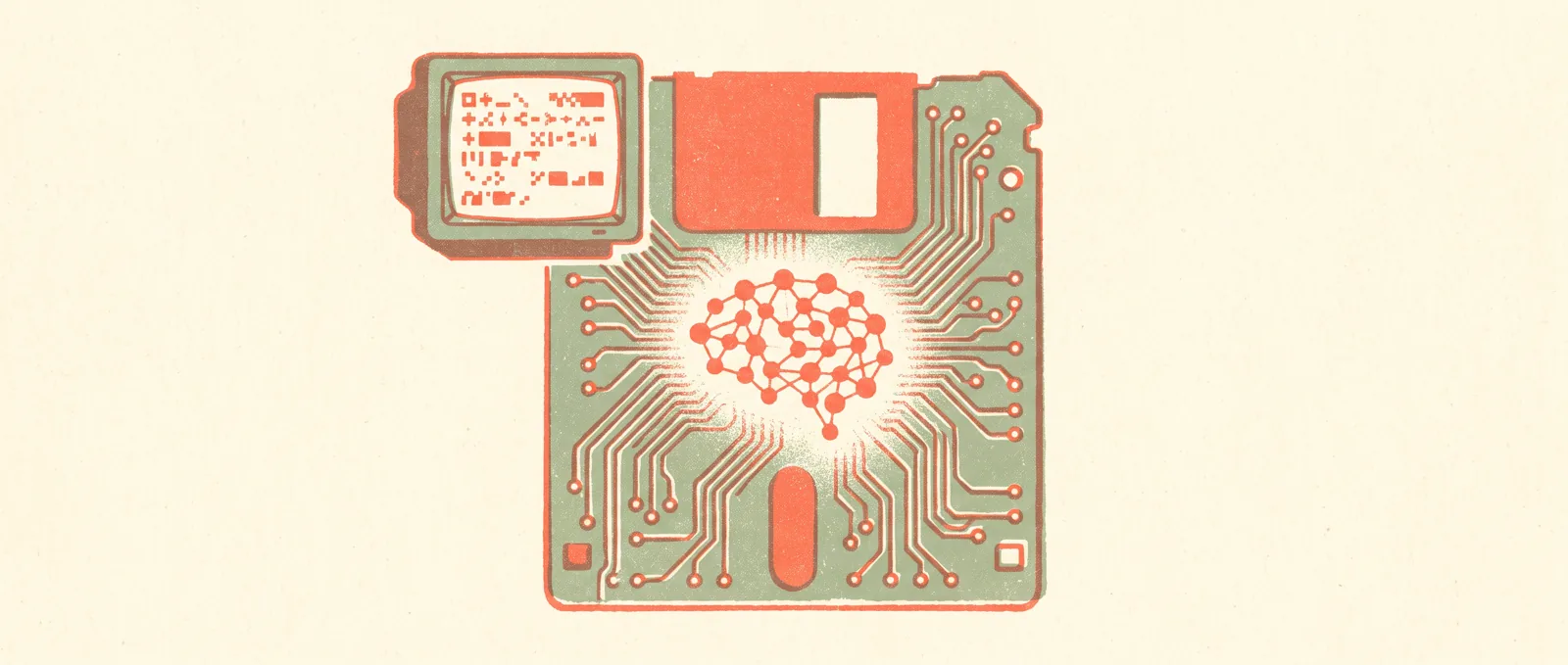
On Hacker News this weekend, a project called bootgpt got attention for a charming reason: it is a small neural network that runs before your computer has even loaded an operating system. Its code fits in the 510 bytes of a PC’s boot sector, the first tiny block a machine reads when it starts. The README calls it “a neural network that boots your PC”.
Do not picture a chatbot. It is a hobby and demoscene project, the kind of challenge programmers enjoy for its own sake. The model is about 11.5 KB of weights stored as 8-bit integers in the sectors right after the boot sector, and it has been trained to imitate Linux boot messages, those scrolling lines of technical text you see when a system starts. Its output looks like garbled kernel logs, because the model has a context window of only eight characters. A context window is how much recent text a model can keep in mind when choosing the next letter, and eight characters is roughly one short word.
The engineering is the interesting part. The boot code is 512 bytes of hand-written assembly that loads the weights through old BIOS routines, prints characters and runs in 16-bit mode on a 386-class processor. To avoid heavy maths, the weights are quantised with power-of-two scales, so inference uses integer arithmetic only. A Python script reproduces the same integer maths, and the README says its output matches the boot sector character for character. It trains on about 3 MB of generated fake system logs.
What’s behind it: Large language models predict the next piece of text from what came before. bootgpt does exactly that, only with a one-hidden-layer network and a vocabulary of single characters. It shows that the core idea is small enough to understand, and that the leap to today’s models is mostly scale, data and training tricks. It also shows what quantisation does: shrinking numbers to fit less memory, the same trick that lets bigger models run on laptops.
Limits are clear. It generates only boot-log-style text, any keypress reboots the machine, and the README mentions BIOS machines, not UEFI.
What this means for you: Nothing practical, and that is fine. For beginners, it is a gentle way to see that “AI” can be a handful of multiplications. For tinkerers, it needs nasm, qemu and Python with numpy to build, and can be tried in an emulator before you consider writing it to a USB stick.
Sources
Claude Chose a Gene Therapy and Guided a Mouse Brain Injection, Researchers Say
An Oxford-linked team says Claude Sonnet 5 picked the therapy and target and ran a mouse brain injection under a vet's approval; results are unreviewed.