Europe's Next AI Data Centres Are Being Built 175 Kilometres From Anywhere, Because That Is Where the Power Is
JLL figures show Europe's coming AI data centres will sit an average 175km from major hubs, up from 46km for 2022 to 2025 projects. Powered land in Amsterdam costs 2.36 million euros per megawatt against 512,000 elsewhere.
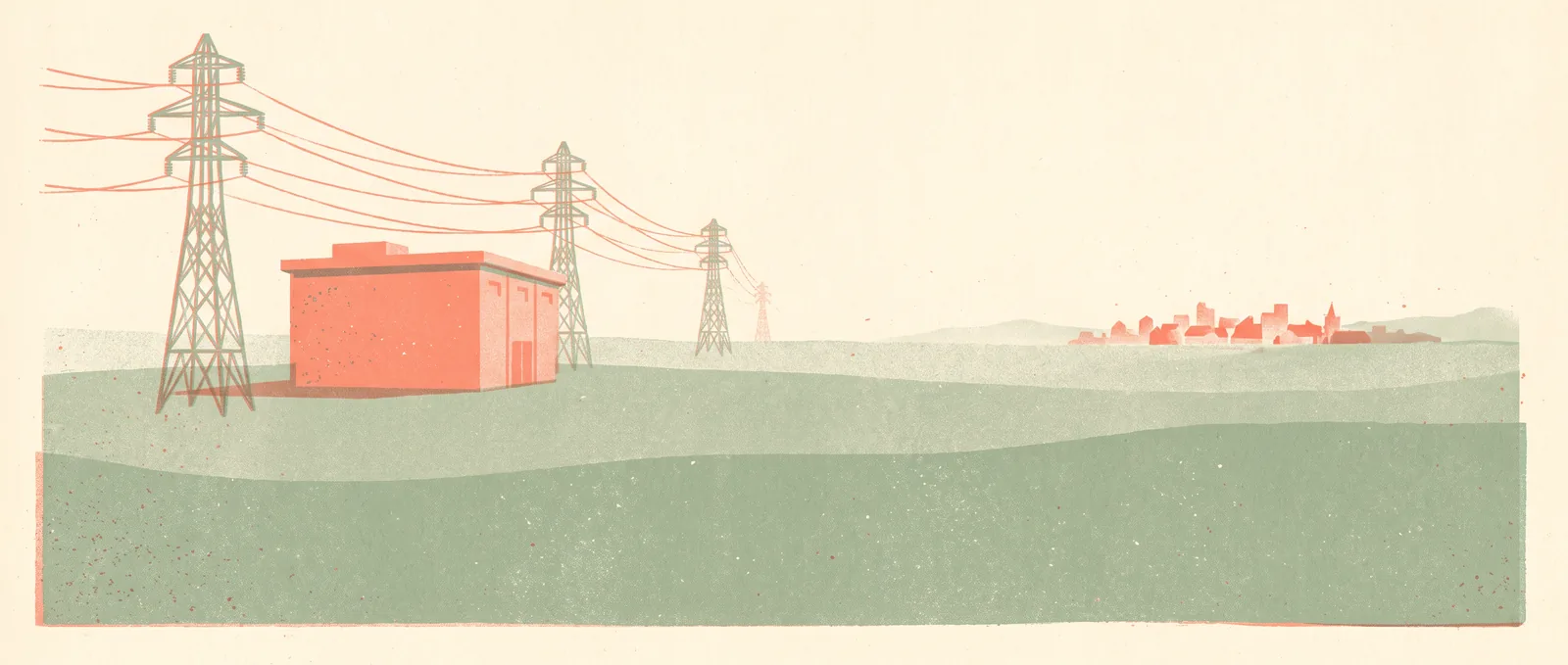
Data from property firm JLL, reported by Reuters on 19 August, shows Europe’s next wave of AI data centres moving decisively out of the cities. Projects now in the pipeline sit an average of 175 kilometres from the major hubs, against 46 kilometres for those built between 2022 and 2025. Greenfield builds, meaning entirely new sites rather than expansions of existing campuses, have gone from 8 percent of the pipeline historically to 39 percent. As JLL’s head of EMEA data centres put it, data centres are being brought to where the power is, not the other way around.
The economics behind it are stark. Powered land, meaning a site with a confirmed grid connection, costs around 2.36 million euros per megawatt in Amsterdam, London or Frankfurt. In smaller cities the same megawatt costs about 512,000 euros. That is a factor of more than four, and for a facility measured in hundreds of megawatts it is the difference between a project working and not. The result is builds heading toward rural Spain and northern Sweden, where land is cheap, renewable generation is plentiful and, in Sweden’s case, the climate does a useful share of the cooling for free.
Here is what changed to make this happen, because it is not simply that AI uses more electricity. The traditional data centre had to sit near its users, because milliseconds of network delay mattered for websites and video and financial trading. That constraint pinned facilities to the big connectivity hubs, and those hubs are precisely where grid capacity has run out. Amsterdam, Dublin and parts of Frankfurt have had connection moratoria for years. But training a model, and to a lesser degree serving one, tolerates distance far better than a live web page does. Once latency stops being the binding constraint, the only thing that matters is the price and availability of a few hundred megawatts, and that logic marches you straight into the countryside.
Two things are worth watching. Grid connection queues in Europe run to years, so the average of 175 kilometres reflects where connections were obtainable, not where anyone especially wanted to build. And putting large industrial facilities into rural areas creates local politics: water use, noise, land, and the question of what the region gets back beyond a handful of jobs. That argument is already loud in the United States and is arriving in Europe.
What this means for you: for most people this is background infrastructure, but it has two visible consequences. If you care about where your data physically sits, which many European businesses do for legal reasons, the map of available regions is about to change shape, and “EU-hosted” will increasingly mean rural Spain or Scandinavia rather than Frankfurt. And if you live somewhere with cheap power and spare grid capacity, this is the decade in which that becomes an economic asset, for better and worse. The broader point is one that gets lost in model announcements: the limiting factor on AI right now is not clever algorithms or even chips, it is electricity and the wires that carry it.
Sources
Source: https://ca.news.yahoo.com/europe-ai-data-centres-seek-100149110.html
The FDA Has Cleared 1,357 AI Medical Devices. Three Were Tested on Whether Patients Got Better
A PLOS Digital Health analysis found that of 1,357 FDA-authorised AI medical devices, 34 appeared in registered clinical trials and only 3 measured outcomes like mortality or hospitalisation.