Thousands of AI Agents Combed Through Mouse Brain Data in 32 Minutes
OpenAI, PerturbAI and Scripps Research used GPT-Rosalind agents to analyse millions of mouse brain cells and propose new leads, which still need lab testing.
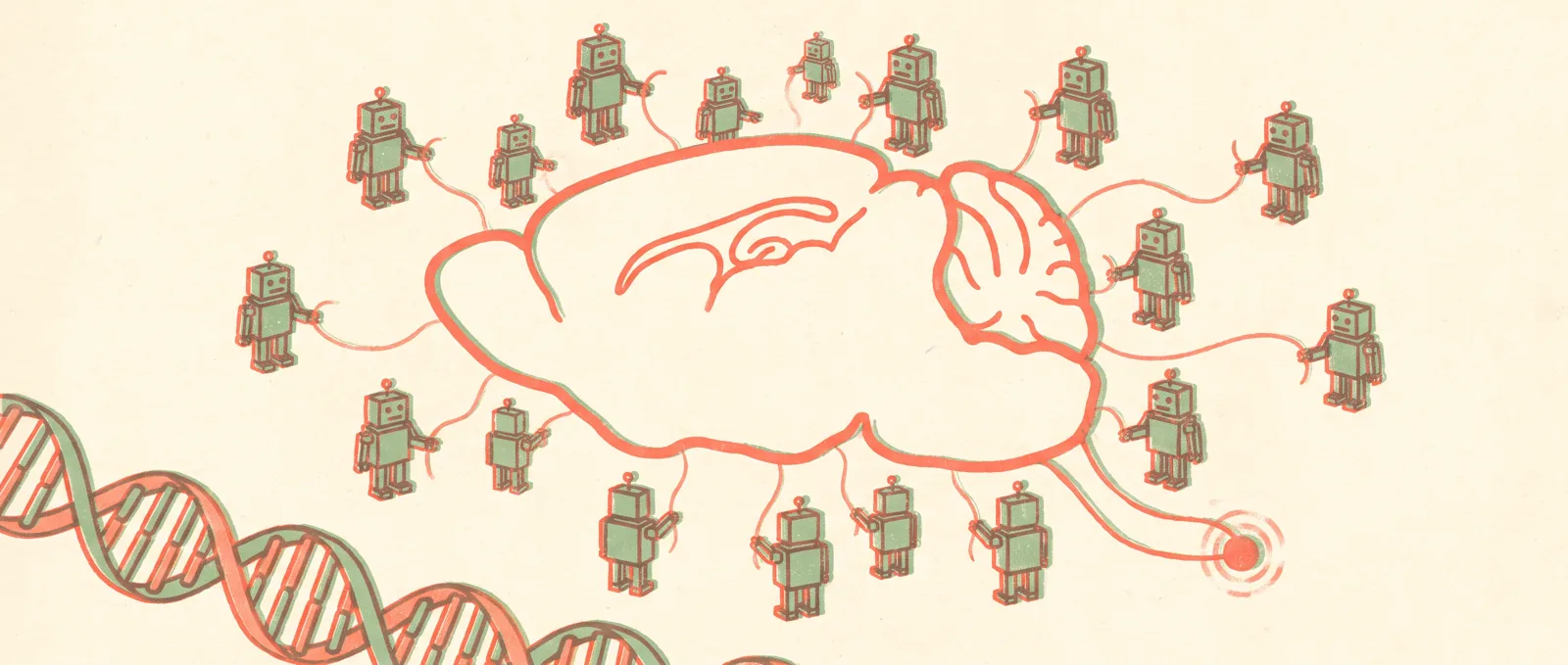
OpenAI, PerturbAI and Scripps Research report that thousands of AI agents, running on OpenAI’s GPT-Rosalind model, analysed existing data from millions of mouse brain cells in 32 minutes. The team says comparable human work would take months to a year.
The method is called “distributed biological reasoning”, which is a fancy name for a simple idea: split the job into many small pieces. Each agent took a single gene disruption from a large brain-wide CRISPR atlas (a catalogue of what happens to cells when one gene is switched off), studied the effects, searched the scientific literature and proposed explanations. Their reports were then merged into a “reasoning atlas” linking genes, effects, papers and possible mechanisms. According to the team, the agents reproduced findings from earlier human analyses and added new leads. Blinded human experts rated the novelty and scientific value of the agents’ work similarly to their own. In a comparison with one agent given the same model, the swarm cited over 700 references at the largest workload versus 11, and experts preferred the swarm’s reports 75 percent of the time.
Two example leads: disrupting the gene Tsc2 changed many neuron-communication genes in the cerebellum, while disrupting its partner Tsc1 changed little, which may relate to cerebellar problems in tuberous sclerosis. And disrupting DCTN1, linked to Perry syndrome, raised cholesterol-production genes, hinting at a possible route to neurodegeneration. The atlas is on GitHub and the paper is on bioRxiv.
Worth keeping expectations grounded: these are hypotheses, not discoveries. The mechanisms still need lab validation, the comparisons are the authors’ own evaluations, and the page gives limited detail on how they were run.
What’s behind it: a single AI assistant works like one very fast researcher. A swarm works more like a department, where each member gets a narrow question and the answers are combined. That helps most when a field has more data than people have time to read, which describes much of modern biology. The bottleneck then shifts from analysing to choosing what to test in the lab.
What this means for you: for most people, nothing changes today. But it is a clear picture of where “agents” are heading beyond chatbots and coding: parallel teams of AI helpers that triage a mountain of material. If you work with large amounts of text or data, the same pattern, one small task per agent and a combining step, is worth keeping in mind.
Sources
Source: https://openai.com/index/scaling-ai-research-for-complex-biological-data/
OpenAI's Decisions API Answers Quick Yes/No Questions for $0.10 per Million Tokens
OpenAI's generally available Decisions API, built on GPT-6 Luna, returns probabilities for bounded questions such as classifying or routing, and bills no output tokens.