Anthropic just signed a 10 billion dollar compute deal with a company that did not exist six months ago
Anthropic booked six years of computing capacity from Volta, a cloud startup founded in early 2026, at a Norwegian hydropower data centre. On the same day, reporting showed Google shifting billions in Anthropic related chip risk off its own balance sheet.
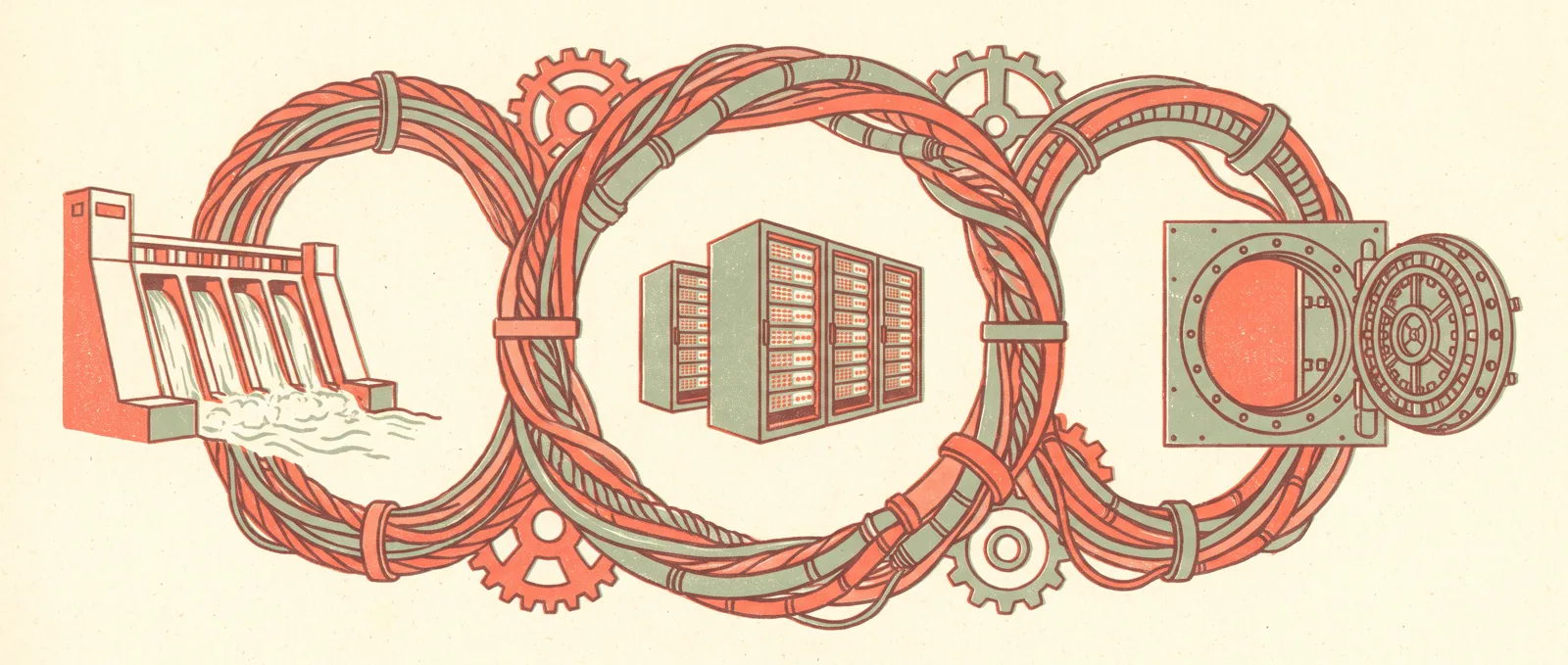
Anthropic has committed to roughly 10 billion dollars of computing capacity over six years from Volta Infra Holdings, a cloud company that was founded in early 2026 and did not exist a year ago. Bloomberg reports the capacity comes from a data centre in Tydal, Norway, where the Bitcoin miner Bitdeer runs hydropower fed infrastructure now filled with Nvidia’s newest Vera Rubin chips. Volta puts the capacity at 133 megawatts, handed over in two phases through March 2027. Bitdeer’s share price rose 14 percent on the news.
Volta raised 300 million dollars in venture funding alongside the deal, led by Andreessen Horowitz and Altimeter Capital, at a valuation of 2.4 billion dollars. Nvidia and Michael Dell also invested, which is the detail to sit with: Nvidia is both an investor in the startup and the supplier of the chips that startup buys. Volta has additionally set up a 5 billion dollar financing pool to help customers cover the cost of the chips up front. On the same day, The Decoder reported that Google is working with Broadcom, Apollo, Blackstone and Morgan Stanley on a financing structure that supplies Anthropic with chips and data centres while keeping most of the risk off Google’s own balance sheet, leaving roughly 200 billion dollars in contracts that depend on Anthropic continuing to grow.
What is behind this. Training and running large models needs enormous, sustained electricity and hardware, and nobody wants to pay for it out of pocket. So the industry has built a web of arrangements where the chipmaker invests in the cloud provider, the cloud provider finances the customer’s chips, and the customer signs a long lease. Everyone books a deal. Nobody carries the whole risk on their own books, which sounds prudent and is exactly what makes it hard to see where the risk actually sits. Anthropic now has agreements with Google, Broadcom, Amazon, SpaceX, AMD and Volta. All of these are bets that demand for AI keeps rising fast enough to cover the lease payments. If it does not, the losses do not stay in one place, they spread along the chain.
What this means for you: nothing about your chatbot changes this week. What these numbers do explain is why AI subscriptions cost what they cost and why free tiers keep getting tighter: somebody has to service six year leases on hydropower data centres. It is also worth reading these announcements for what they are. A 10 billion dollar commitment is a promise about the future, not money that has changed hands. If you run a business that has become dependent on one AI provider, the reasonable precaution is not panic but portability, so knowing what it would take to move to a different model, and how much of your workflow is locked to one vendor’s API.
Sources
Someone got DeepSeek V4 Flash running in production on a single AMD card and published every patch it took
A public repository documents the configuration, patches and tuning needed to serve DeepSeek V4 Flash on one AMD MI300X, unquantised. It is a useful record of how much work running an open model on non Nvidia hardware still is.