Google Gives Every AI Agent Its Own Tiny, Locked-Down Computer
Google's Agent Compute Engine runs each AI agent in a separate hardware-isolated micro virtual machine that pauses when idle. A preview is planned for the coming months.
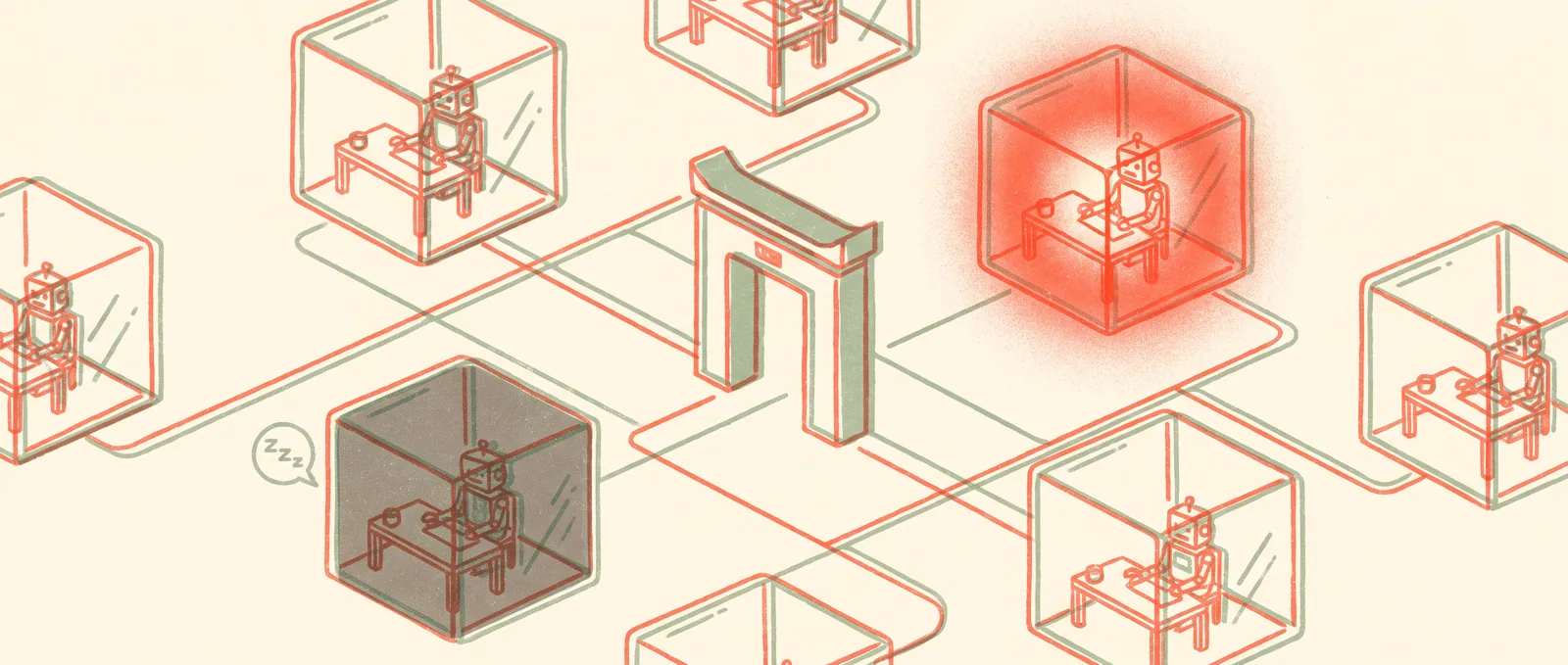
On October 22, Google announced Agent Compute Engine, a Google Cloud service that gives each AI agent session its own small, sealed-off virtual computer. Google calls these “microVMs”: stripped-down virtual machines that start almost as fast as an app, but are separated from everything else by the hardware itself. A preview is planned “in the coming months”, and the blog post gives no pricing.
The interesting part is how the pieces are split up. Google describes the agent’s “brain”, the part that decides what to do, as running outside the sandbox. The sandbox itself, the “hands”, only executes commands. It holds no passwords or access keys. When the agent needs to call a service, traffic goes through a separate Agent Gateway that checks policy and adds the needed credential on the way out. So even if an agent is tricked into leaking everything it can see, there is no secret in there to leak. Google also says every request is logged against the user, the agent and the machine involved.
There is a cost angle too. While an agent is “thinking” and no commands are running, the platform saves the machine’s state and frees the resources, then resumes it on the next tool call. Google says you do not pay for idle machines, though it does not explain how that is metered. Files and memory can persist across days, and developers can snapshot, fork or rewind a session, handy when an agent wants to try several approaches in parallel. Google says it already uses the system internally for Gemini and its Antigravity coding tool.
What’s behind it: the more freedom we give agents, the more they need a safe place to work. A coding agent needs a real computer with real tools, but a real computer is also a real risk. Sandboxes solve this the way a test kitchen does: let the agent make a mess, but keep the mess away from the rest of the building. Many companies are building versions of this, and the race is about speed, cost and trust.
What this means for you: if you simply use chat assistants, nothing changes. If you build or buy agent-based tools for a team, this is a sign of what to ask vendors: where does the agent run, what secrets can it see, and can you audit what it did? Keep in mind this is a Google announcement with no independent testing and no release date yet.
Sources
Source: https://cloud.google.com/blog/topics/ai-infrastructure/agent-compute-engine-deep-dive
Thousands of AI Agents Combed Through Mouse Brain Data in 32 Minutes
OpenAI, PerturbAI and Scripps Research used GPT-Rosalind agents to analyse millions of mouse brain cells and propose new leads, which still need lab testing.