Google DeepMind has broken up the AlphaFold team, and a quarter of its authors have left
The team behind the Nobel-winning protein model was reassigned over the past year. Nobel laureate John Jumper and two colleagues are heading to Anthropic.
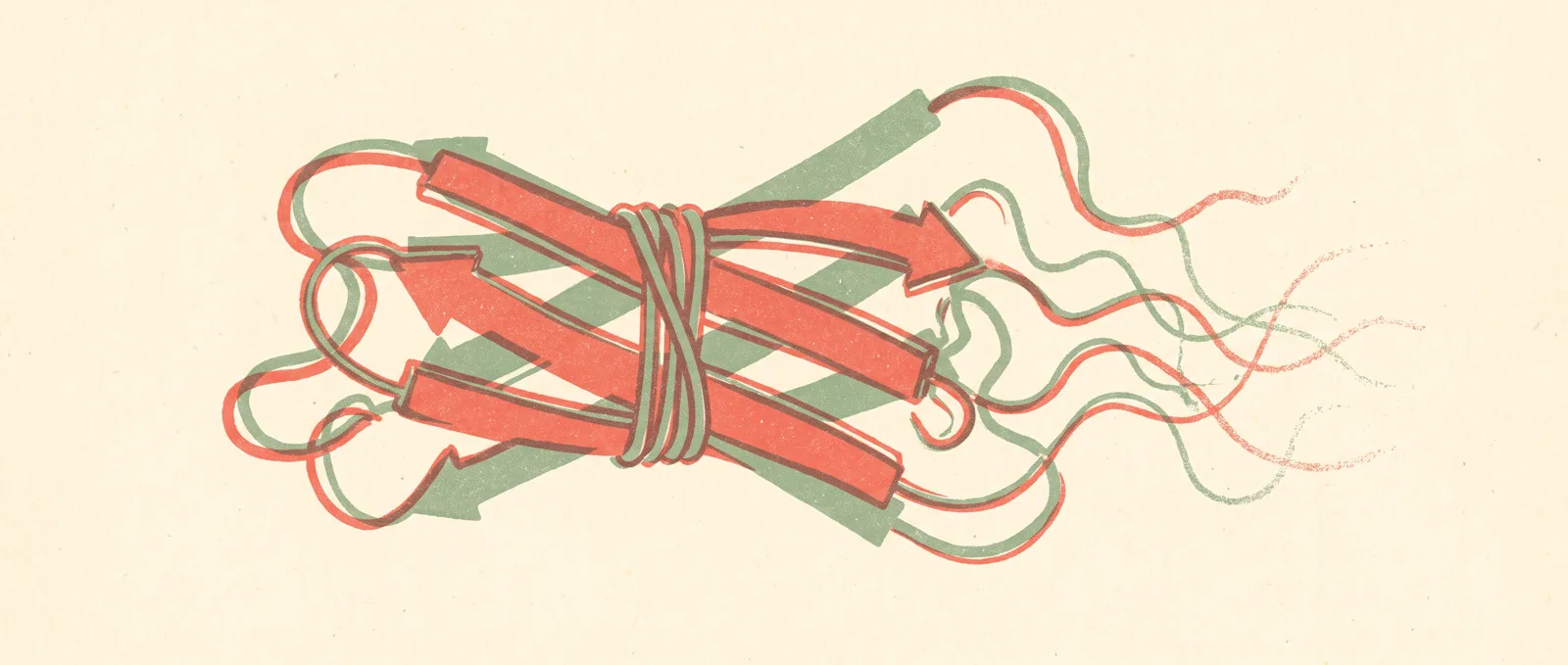
Google DeepMind has dismantled the team behind AlphaFold, the Financial Times reports. Most of the original authors of the AlphaFold papers were reassigned to other projects over the past year, and nearly a quarter of the full-time DeepMind authors have left the company entirely. DeepMind confirmed the moves.
AlphaFold, developed from 2018 onward, predicts the three-dimensional shape of proteins from their chemical sequence. That sounds narrow until you know that a protein’s shape determines what it does, and that working it out in a lab used to take months or years per protein. AlphaFold did it in minutes and released predictions for essentially every known protein. John Jumper, vice president and engineering fellow, and DeepMind CEO Demis Hassabis received the 2024 Nobel Prize in Chemistry for it. It became the showcase for DeepMind’s whole strategy: pick a hard scientific problem, build a dedicated team around it, solve it.
That strategy is now being retired. “Our strategy over the last nine years has been to focus on grand challenges, a concrete goal every project is focused on,” Pushmeet Kohli, vice president of research and head of the AI for Science team, told the FT. “The strategy has evolved.” Instead of organizing researchers around single problems like protein folding, the lab is building Gemini-powered systems meant to assist scientists broadly and eventually automate parts of the scientific process itself. Former AlphaFold researchers now work on Gemini, enzyme design, nuclear fusion and genomics, or moved to Isomorphic Labs, the Alphabet drug discovery spinout with partnerships at Novartis and Eli Lilly.
The departures reach the inner circle. Earlier this year Jumper and fellow AlphaFold researcher Jonas Adler moved to Google’s internal “Code Strike” team, assembled to improve the company’s AI coding capabilities as it chases Anthropic and OpenAI. Last month Jumper announced his move to Anthropic, where Adler and AlphaFold colleague Alexander Pritzel will join him. One DeepMind employee, speaking anonymously to the FT, called all three “instrumental, important, core members” and said the departures caused surprise internally. Anthropic launched Claude Science, a workspace for biology and drug discovery, earlier this year.
There are two readings here and both are probably partly true. The generous one: general-purpose models got good enough that a bespoke team per problem is no longer the efficient way to do science with AI. The less generous one: the frontier agent race is where the money and the attention are, and specialised science teams lose the internal competition for talent. Either way, the lab that won a Nobel Prize for a narrow scientific model is reorganizing around a general one.
What this means for you: Directly, very little. Indirectly, this is a useful signal about where AI research money flows. The single most celebrated scientific result in modern AI is being folded into a general assistant strategy, which tells you how strongly the industry now believes the general models will absorb the specialised ones. Worth keeping expectations grounded, though: nobody has yet shown a Gemini-style system producing an AlphaFold-scale scientific result.
Sources
Source: https://www.ft.com/content/61b2953d-ee0d-45de-af6e-a9c1cf524b33
Google's Lyria 3.5 lets you fix one part of an AI song without redoing the whole thing
The new music model adds Selective Section Painting, so a bad chorus no longer means regenerating the entire track. Google still will not say what it trained on.