The Rivals Building AI Agents Just Agreed on How Those Agents Should Talk to Each Other
Google's Agent2Agent protocol, the standard for letting AI agents from different companies work together, moved under neutral Linux Foundation governance. It now sits alongside Anthropic's Model Context Protocol in a group that grew to 250-plus members in under a year.
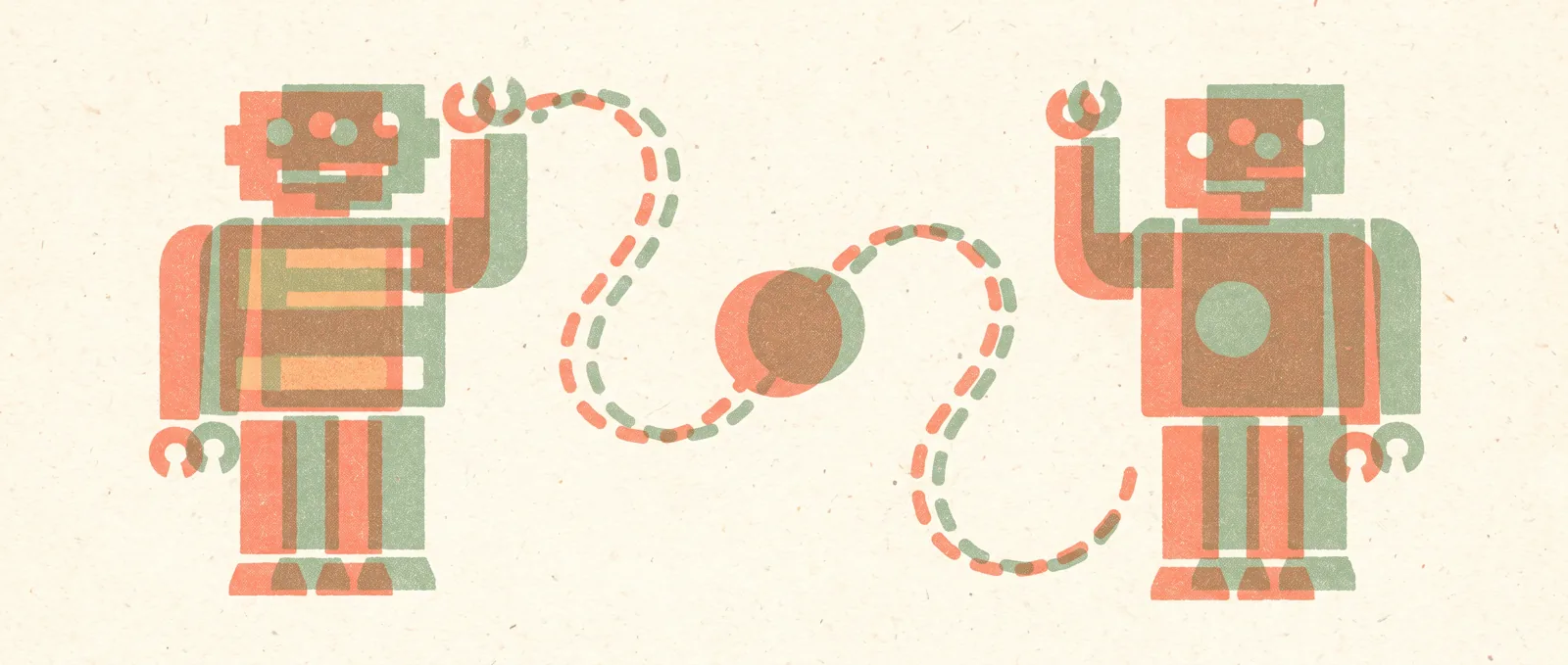
On August 20, Google’s Agent2Agent protocol, known as A2A, formally joined the Agentic AI Foundation, a Linux Foundation project set up to steward open standards for AI agents. That puts A2A under the same neutral, vendor-independent governance as Anthropic’s Model Context Protocol (MCP), which was already a founding project there. The foundation has grown from 49 to more than 250 member organizations in under a year, with AWS, Anthropic, Block, Bloomberg, Cloudflare, Google, Microsoft, and OpenAI all signed on as top-tier members.
If you’ve never touched an AI agent directly, here’s the short version of why this matters: an “agent” is an AI system that doesn’t just answer a question but takes actions, like calling other software, other agents, or online tools to actually get something done. For agents built by different companies to work together, cooperate on a task, or hand off work to each other, they need a shared language. A2A and MCP are two different pieces of that language: MCP mostly governs how an agent talks to the tools and data sources it uses, while A2A governs how one agent discovers and talks to another agent entirely, potentially one built by a completely different company.
What’s actually going on here: competitors rarely donate their own protocols to neutral foundations unless the alternative, everyone running incompatible private standards, is worse for business than sharing control. Google built A2A and could have kept steering it unilaterally; moving it under the same roof as Anthropic’s MCP signals that the industry has decided interoperability is worth more than any one company’s control over the standard. That’s a meaningful, if unglamorous, milestone: a fragmented agent ecosystem, where an agent from one vendor simply can’t talk to an agent from another, would slow down enterprise adoption for everyone.
What this means for you: if you’re a developer building with AI agents, this is good news, since a shared, foundation-governed standard makes it more likely that tools and agents from different vendors will keep working together instead of locking you into one company’s ecosystem. If you’re a business evaluating AI agent tools, it’s a reasonable signal that the space is maturing past the “everyone builds their own walled garden” phase. For most everyday users, this is invisible plumbing. Nothing changes in what you see today, but it’s the kind of groundwork that determines whether the AI agents showing up in your apps next year can actually cooperate with each other.
Sources
Anthropic Opened a Free School for Learning Its Own AI, 355 Lessons and No Credit Card
Claude Academy is Anthropic's new free learning hub, built around how the company trains its own employees. It covers everything from total-beginner basics to API-level technical work, with certificates at the end.